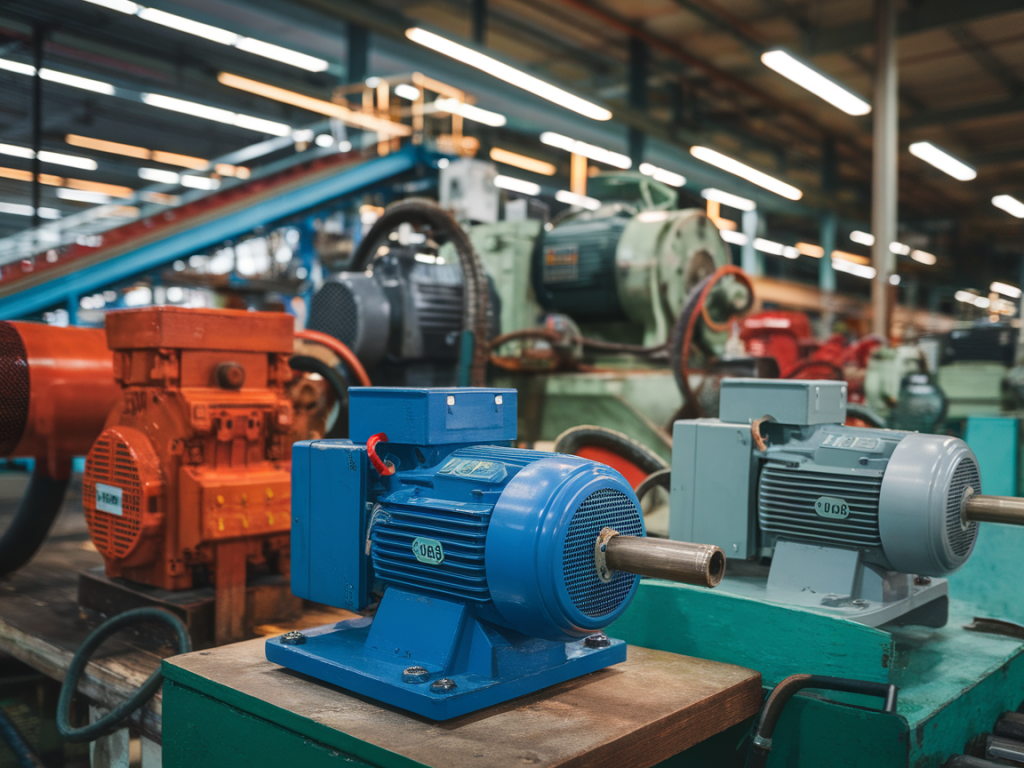
When a plant manager asks me, “Which retrofit delivers the fastest ROI for motor drives across a mixed fleet — VFDs, soft starters, or variable torque control?” I don’t hand out a one-size-fits-all answer. Instead I walk through the practical trade-offs, real‑world drivers of payback, and a simple decision framework you can apply on the shop floor. I’ll share what I’ve seen work across automotive, food, and electronics lines so you can quickly identify the highest‑impact retrofit for your own operations.
What people usually mean by “fastest ROI”
In conversations ROI typically means the calendar payback period (months/years) from energy and operational savings versus retrofit cost. But for plants I care about three tangible outcomes:
Different retrofits deliver different mixes of those benefits. A straight energy‑focused investment might pay back quickly in a continuous process but be irrelevant in an intermittent production cell where cycle time and wear matter more.
Quick primer: what each retrofit actually does
Variable Frequency Drives (VFDs) give continuous speed control by adjusting motor frequency and voltage. They deliver energy savings when motors run below rated speed and when soft start/stop reduces mechanical stress. Modern VFDs add torque control, PLC/fieldbus integration, regenerative options, and advanced motor protection.
Soft Starters reduce inrush current and mechanical shock during start/stop using controlled voltage ramping (often via thyristors). They don’t give continuous speed control and so don’t reduce energy in normal steady‑state operation, but they reduce wear and electrical peaks substantially.
Variable Torque Control (VTC) is less a single device and more a control strategy often paired with VFDs or intelligent drives — tuning torque to match load (fan, pump) so power scales roughly with the cube of speed. In pumps/fans this is where the fat energy savings hide.
How I evaluate ROI on mixed fleets
Across mixed fleets (motors with different sizes, load profiles, and criticalities) I follow a structured approach:
Rules of thumb I use in the field
Comparative table: VFD vs Soft Starter vs Variable Torque Control
| Criteria | VFD | Soft Starter | Variable Torque Control (VTC) |
|---|---|---|---|
| Primary benefit | Speed control, energy savings, process optimization | Reduced inrush, lower mechanical stress | Energy scaling for pumps/fans (paired with VFD) |
| Typical payback (industrial) | 6–24 months (variable speed loads) | 6–18 months (frequent starts/high inrush) | 6–12 months for fans/pumps with high runtime |
| Energy savings | High for variable speed; medium for some constant torque | Minimal during steady run; savings from reduced demand peaks | Very high for centrifugal loads (cube law) |
| Complexity | Medium–high (integration, harmonics mitigation) | Low–medium | Medium (requires proper tuning/controls) |
| Maintenance impact | Lower mechanical wear; new electronics maintenance | Less mechanical wear; simple device | Same as VFD (often implemented within drive) |
Practical examples from projects I’ve led
At an automotive tier‑1 plant I helped, we audited ~120 motors. We found 18 centrifugal fans running at 60–80% design speed. Retrofitting them with VFDs + VTC delivered ~35% site electrical savings on those circuits and payback in 9 months. The key was measured runtime and the cube‑law effect.
Conversely, at a food packaging line with frequent short conveyor starts, soft starters reduced tripping and mechanical breakdowns. Energy savings were modest, but maintenance costs dropped and uptime improved — the plant documented a 14‑month payback when factoring avoided production losses.
Hidden costs and risks you must include
Don’t forget these items that can erode expected ROI:
How I decide on a mixed‑fleet program
My practical playbook is:
Quick calculation example you can run
To get a fast estimate:
Run the same math for soft starters but expect energy savings only from reduced start peaks and minor steady‑state impacts.
If you want, I can provide a simple spreadsheet template to run this against your motor list, or help prioritise the top candidates from a motor inventory you already have. In my experience, the fastest ROI almost always comes from focusing on high‑hour, variable‑speed centrifugal loads with VFDs and good variable torque control — but the real gains often come from the blend: soft starters for frequent starts plus selective VFDs where process control and energy savings align.