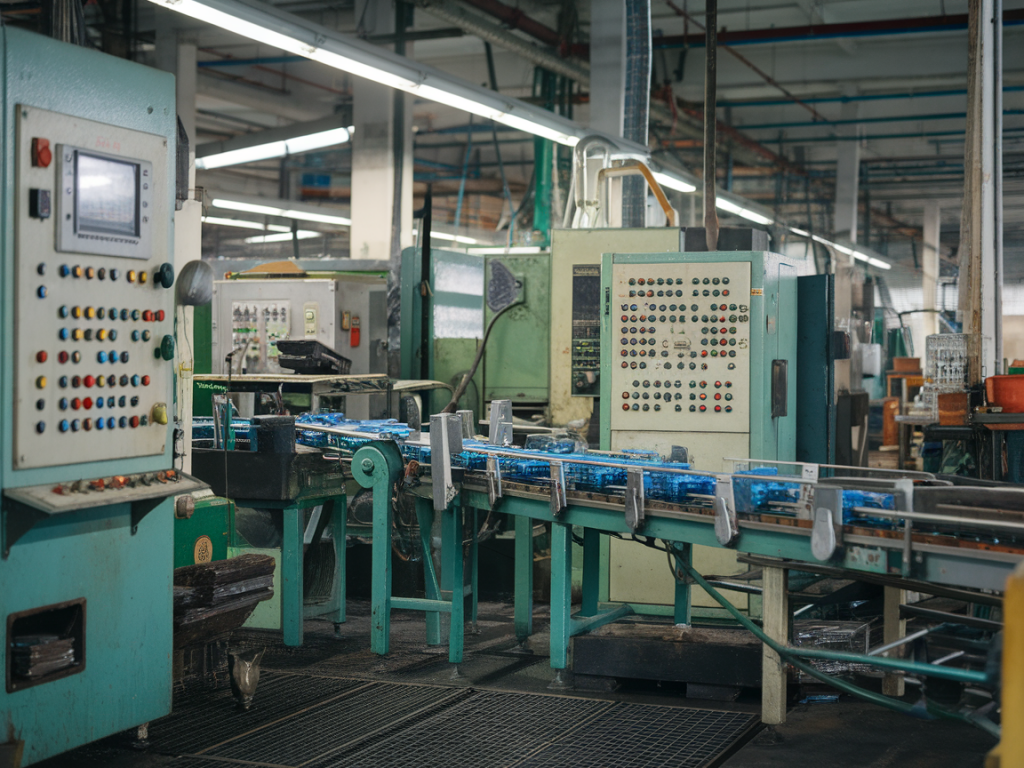
I’ve spent the last decade on plant floors and in control rooms watching the same pattern repeat: when variability or rising scrap shows up, the knee‑jerk response is to order new sensors, replace valves, or spec a higher‑precision actuator. Sometimes hardware upgrades are warranted, but often the source of waste sits in the control logic itself — poorly tuned loops, aggressive feedforward that never fires, or interlocks that introduce hunting. The good news is you can reduce material waste significantly by redesigning control loops — without spending on new hardware.
Why control loops matter for material waste
Control loops are the gearbox of production processes. When they work well they maintain setpoints, compensate for disturbances, and do it with minimal overshoot. When they don't, you see overfilling, rework, off‑spec product, and unnecessary purge cycles. I’ve seen plants cut raw material scrap by 10–30% simply by rethinking loop architecture, retuning controllers, and adding simple logic — not new instruments.
Diagnose before you redesign
Before changing controllers, gather evidence. A sloppy change will make things worse. I recommend:
Use the data to prioritize loops that have the biggest impact on material consumption. Typical high‑ROI targets are level control in tanks, flow control on dosing lines, temperature control in reactive systems, and pressure control on purge or blowdown lines.
Strategy 1 — Retune with purpose: move from aggressive to optimal damping
Most plants are either underdamped (oscillatory) or overdamped (slow recovery). Both cost material. Aggressive tuning can cause overshoot that triggers trips or causes overfilling; conservative tuning wastes time and allows prolonged off‑spec conditions. I prefer a data‑driven retuning workflow:
Case in point: retuning a level loop on a filling tank reduced overfills by 60% and cut excess product per batch by 12% after switching from a “fast but twitchy” tune to an IMC‑based conservative tune with a feedforward component.
Strategy 2 — Add simple model‑based feedforward and cascade loops
Feedforward and cascade structures are often underrated because they require some thinking about process relationships. But a modest feedforward that compensates for a measurable disturbance can eliminate the need to over‑correct downstream.
Example: adding feedforward from an upstream pump speed to a dosing valve eliminated the frequent overshoots during pump ramp‑up, reducing off‑spec lots and saving raw material.
Strategy 3 — Use conditional logic and phase‑aware control for batch processes
Batches are not static: they have fill, react, dwell, and drain phases — each needs its own control strategy. A single PID with one tuning rarely suits all phases.
On several projects I replaced one‑size‑fits‑all tuning with a state machine that selected appropriate PID parameters for each phase. Scrap from phase transitions dropped significantly because the controller didn’t fight hydraulic inertia during transfers.
Strategy 4 — Reduce effective deadtime with predictive compensation
Long deadtime is a silent driver of waste: it forces conservative control, or if ignored, results in overshoot. You don’t need fancy hardware to compensate — you can use software predictive elements.
For example, a viscous flow line with pipeline lag benefitted from a simple first‑order predictive block that reduced valve movement and prevented large purge volumes during setpoint changes.
Strategy 5 — Focus on setpoint management and change policies
Sometimes the waste problem is not control quality but frequent or unnecessary setpoint changes. Every change risks transient off‑spec product. Tighten change management:
A plant I worked with cut reagent usage by 8% by applying a setpoint scheduler that reduced pointless manual tuning during shift handovers and used a small optimization routine to set temperature targets that traded off yield vs. energy.
Operational enablers and KPIs to track
Redesigning control loops is part engineering, part operations change. Track these KPIs to ensure your changes reduce material waste:
| KPI | Why it matters | Target/How to measure |
| Material scrap rate | Direct measure of waste | kg scrap / tonne produced, measured per shift or batch |
| Off‑spec proportion | Shows process control failures | % of batches outside spec; trend before/after control changes |
| Control loop integral of absolute error (IAE) | Quantifies steady‑state error and oscillation | Compare IAE quarterly for prioritized loops |
| Actuator travel and moves | High movement often correlates with wear and purge cycles | Valve travel counts per hour; aim to reduce unnecessary moves |
Practical tips for safe implementation
When you change control logic you must manage risk:
Finally, don’t underestimate the value of simple: a filtered setpoint, a small deadband, or a conditional inhibition can outperform a costly new sensor. The loop architecture you choose determines how hardware is used. If you redesign that architecture thoughtfully, you’ll often find material savings that pay back faster than any instrument upgrade.