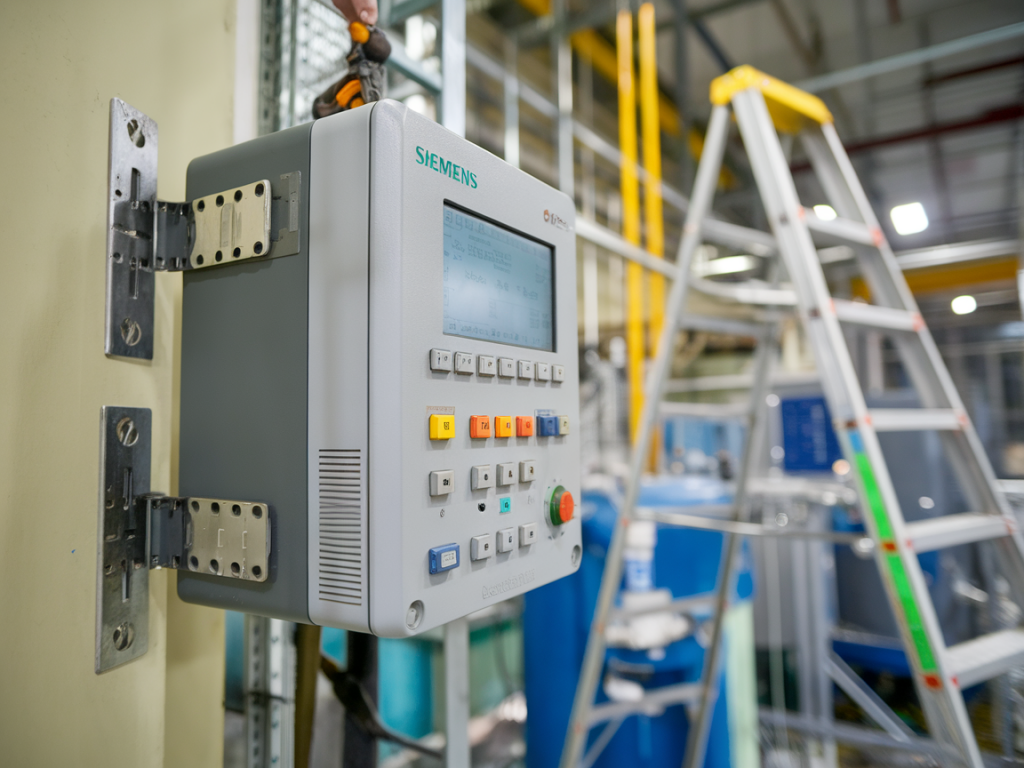
Why I tackled cross‑plant hot failover without a hardware shopping spree
I've been on the shop floor when a single PLC failure stopped two downstream lines and forced a weekend of overtime and expensive emergency hardware orders. Two plants, one critical controller, and a supplier lead time that felt like an eternity — that experience shaped my goal: build resilient, hot failover between geographically separate sites without buying a forklift of spare Siemens CPUs and racks.
In practical terms "hot failover" here means automatic, near‑instant takeover of control logic and process continuity when the primary controller or plant becomes unavailable. The trick is achieving that safely and deterministically across two plants while keeping capital and maintenance costs reasonable.
Architectural options I evaluate first
There are several ways to achieve high availability with Siemens S7 controllers. Each approach has tradeoffs in cost, complexity, latency and certification burden. I shortlist three patterns that I use depending on process criticality and budget:
- Distributed local control with coordinated mastership — each plant keeps local PLCs handling I/O; a master controller (or application) coordinates higher‑level sequence and setpoints. Failover promotes the secondary site's master logic.
- Virtualized/soft PLCs with central code replication — run PLC runtime on industrial PCs (VMs) at each site, keep program and state synchronized via secure replication; I/O remains local to each plant.
- Networked redundancy with mirrored controllers — physically redundant Siemens CPUs using built‑in redundancy where possible, combined with remote I/O and deterministic links. This is often costly for cross‑site implementation and limited by latency.
What I typically recommend for two plants
For most manufacturing processes that are critical but not microsecond‑sensitive across sites, I choose a hybrid approach:
- Keep deterministic, safety‑critical I/O local — let the nearest PLC (S7-1500 or ET 200SP) run the low‑level interlocks and machine control.
- Implement higher‑level sequence logic and recipe/state replication using virtual PLC runtimes or redundant application servers at both sites.
- Use a heartbeat/arbiter plus distributed data sync so the standby site can assume mastership automatically and continue with minimal disruption.
Core building blocks and technologies
These are the components I design around when implementing cross‑plant hot failover for Siemens environments:
- S7 controllers and remote I/O — S7‑1500 CPUs and ET 200 distributed I/O at each plant.
- TIA Portal and version control — consistent codebase for all PLCs; store program in git or a controlled file repository with automated deployment pipelines.
- Soft PLC runtimes / Industrial PCs — Beckhoff TwinCAT or Siemens Runtime (where supported) running in redundant VMs to host higher‑level logic.
- OPC UA & MQTT brokers — secure data exchange, Pub/Sub models for state replication and supervisory control.
- Heartbeat/arbiter service — lightweight service to elect the active site, manage ownership of recipes/recipes locks, and trigger failover.
- Secure network with VPN and QoS — low jitter, encrypted links between plants for replication and failover messages.
- HMI/SCADA redundancy — WinCC or other HMI with mirrored runtime instances and shared project files.
Step‑by‑step implementation pattern I use
Below is the process I follow when implementing a hot failover solution across two plants.
- Define failure scenarios and RTO/RPO — clarify what “acceptable downtime” is and how much process/state we can tolerate losing. This drives synchronization frequency and complexity.
- Segment control levels — split local safety/IO logic (must always be local) from supervisory sequence and recipe management (can be redundant).
- Choose runtimes and sync mechanism — pick soft PLCs or redundant application servers at both plants and decide on OPC UA or MQTT for state replication.
- Design ownership/leader election — implement an arbiter (can be Kubernetes leader election, a lightweight database lock, or cloud service) to ensure a single active master.
- Automate program sync and deployment — TIA export pipelines, secure file copying, or container images for soft PLC runtime so both sites run identical code and versions.
- Implement graceful takeover sequences — sequence for the standby to load the latest state, sync recipe/data, validate local I/O matches expected state, then set active bit to takeover.
- Test failover modes extensively — simulate network partitions, full primary plant loss, and partial failures. Measure recovery time and data consistency.
- Hardening and security — secure VPN, certificates for OPC UA, role‑based access control and logging for audit trails.
Practical tips and gotchas from projects I've led
Here are pragmatic lessons I learned the hard way:
- Never try to mirror hard real‑time I/O across sites — network latency and jitter make hard real‑time replication brittle. Keep I/O local and design the system so the standby can pick up at a sequence boundary.
- Use deterministic checkpoints — synchronize state at known checkpoints (end of batch, part count milestones) rather than an opaque stream of signals. This simplifies reconciliation on takeover.
- Time synchronization matters — use NTP/PTP across both sites so logs and state timestamps align.
- Version lock your controllers — any code drift between sites creates hidden bugs during failover. Automate deployments from a single repository.
- Design for graceful degradation — if full takeover is impossible, ensure the standby can at least maintain critical safety and basic production runs.
Comparison table — common approaches
| Approach | Pros | Cons |
|---|---|---|
| Local I/O + remote master (hybrid) | Cost‑effective; local safety; reasonable RTO | Requires careful state sync and leader election |
| Virtualized soft PLCs at both sites | Flexible, easier replication, lower hardware cost | Requires rigorous validation; not always certified for safety functions |
| Full mirrored physical PLC redundancy | Deterministic, Siemens‑native where supported | Expensive; limited for cross‑site; network latency sensitive |
How I measure success
When I deploy these solutions I track a short set of KPIs to ensure the design meets operational needs:
- Mean time to failover (MTTFo) — how long between primary loss and secondary controlling safely.
- State reconciliation accuracy — percentage of process variables reconciled without manual intervention.
- False positive failovers — how often the system incorrectly flips mastership.
- Serviceability — time to update code and roll changes to both sites safely.
Operational checklist before you go live
- Document all failure modes and acceptance criteria with operations.
- Validate local safety logic remains independent and certified.
- Test failback — returning control to the original primary after recovery.
- Run full outage simulations during a maintenance window.
- Train operators on failure indicators and manual override procedures.
- Set up continuous monitoring and alerting (network, arbiter, replication lags).
Implementing cross‑plant hot failover for Siemens S7 environments is less about a single product and more about partitioning responsibilities, deterministic checkpoints, and robust synchronization. With the right architecture — local I/O, replicated higher‑level logic, a reliable leader election mechanism, and disciplined version control — you can achieve resilient automatic failover without buying a warehouse of spare CPUs. If you want, I can sketch a reference architecture diagram for your specific plant layouts or help evaluate whether soft PLCs are acceptable given your safety and certification constraints.