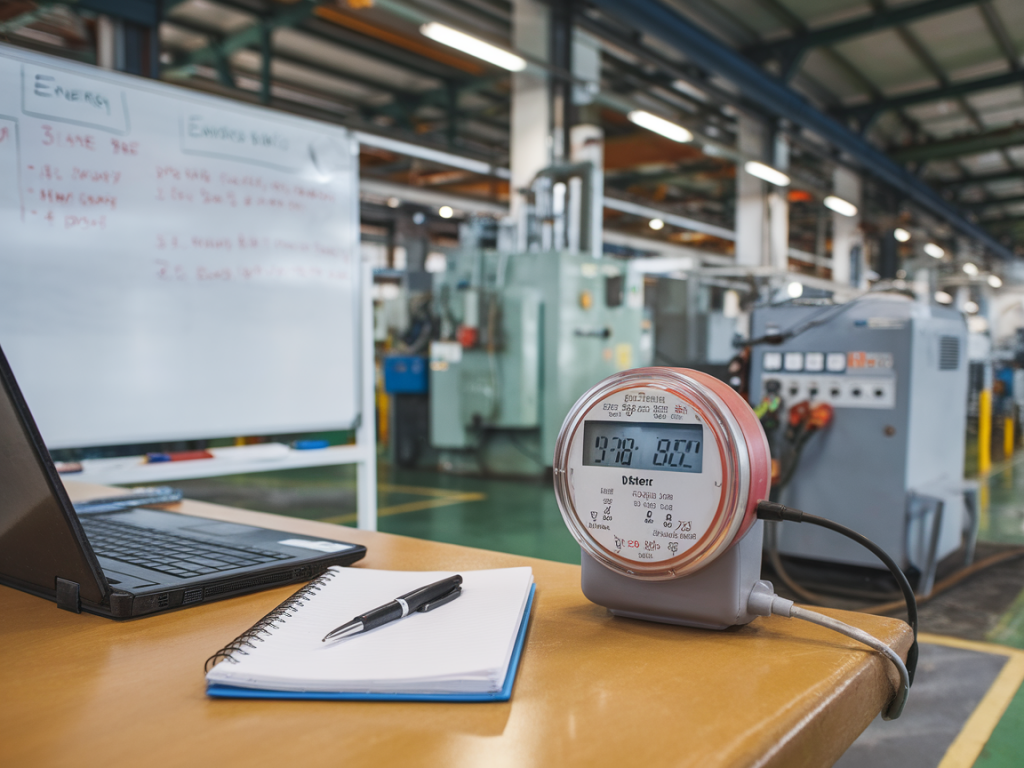
When a supplier, energy contractor, or even an internal sustainability program tells you that the new smart meters on your plant floor will cut energy use by 15–30%, my first reaction is always the same: show me the data, the assumptions, and the method. Smart meters can deliver excellent visibility, but translating their raw readings into verified, repeatable energy savings requires careful setup, normalization, and sceptical analysis.
Why smart-meter claims need independent validation
Smart meters give you more granular energy data than a monthly utility bill ever could. But more data does not automatically equal reliable savings claims. Common pitfalls I see on projects include:
Validating savings means answering not only "Did energy consumption fall?" but "Did energy intensity (energy per unit of production or per hour of operation) improve in a way that’s statistically significant and attributable to the measure?"
High-level validation workflow I use
My approach is pragmatic: it combines best-practice measurement and verification (M&V) with plant-floor reality. The workflow looks like this:
Define baseline and KPIs carefully
Start by choosing the right Key Performance Indicators (KPIs). For most plants the most useful are:
Baselines need a representative period. I usually recommend at least 3–6 months of pre-implementation data, longer if your process is seasonal. Clearly document any known anomalies in the baseline (shutdowns, tool installation, production ramp-ups).
Check meter selection, installation, and configuration
Smart meters come in many flavors: whole-site CTs, circuit-level meters, clamp-on portable units, and PLC/OPC-integrated devices. A few practical checks I always run:
Brands I’ve worked with on plant floors include Siemens (SITRANS), Schneider (PowerLogic), Fluke, and Landis+Gyr. The specific device matters less than the host of configuration and QA checks above.
Data collection, cleaning, and exploratory analysis
Raw meter data is noisy. Before you run any savings calculations do three things: clean, visualize, and sanity-check.
If you find large unexplained variance, pause — don’t rush to publish savings. Investigate the root cause: was a compressor cycling differently, did shift patterns change, or did a parallel energy-efficiency measure occur?
Normalize to isolate real savings
Normalization converts raw consumption into a comparable metric that controls for confounding variables. Common normalizers include:
Regression models are typically sufficient for most plant-level analyses. A simple linear regression might look like:
Energy = a + b × Production + c × CoolingDegreeDays + d × OperatingHours
Train the model on baseline data and use it to predict expected post-implementation energy given actual production and weather. Savings = PredictedEnergy - MeasuredEnergy. This is essentially the IPMVP Option C/D philosophy (whole-facility or calibrated simulation), but implemented pragmatically.
Attribution: how do you know the meter upgrade or project caused the change?
Proving causality is the hardest part. I prefer layered evidence:
For high-stakes claims, run a difference-in-differences analysis or include interaction terms in your regression to isolate the effect of the intervention.
Simple M&V example and table
Here’s an illustrative example for a compressed-air system where a smart control and leak-repair program was applied. Numbers are simplified.
| Baseline (3 months) | Post (3 months) | Normalization | |
|---|---|---|---|
| Measured energy (kWh) | 120,000 | 100,000 | — |
| Production (units) | 60,000 | 62,000 | normalize per unit |
| Energy intensity (kWh/unit) | 2.00 | 1.61 | Measured/Production |
| Predicted energy given production | — | 119,000 | From baseline regression |
| Attributed savings (kWh) | — | 19,000 | Predicted - Measured |
| Percent savings | — | 16% | 19,000/119,000 |
In this example the normalized and regression-predicted numbers give confidence that most of the reduction is due to the measures, not simply a small uptick in production.
Quantify uncertainty and report transparently
No measurement is perfect. Be explicit about uncertainty sources and confidence intervals. I usually include:
Report savings as a range when appropriate — for example, 12–18% energy intensity reduction with 90% confidence — and list the assumptions used to derive that range.
Practical tools and standards
For practical implementation I use a mix of tools depending on the scale:
Standards to reference include the IPMVP framework for M&V and ISO 50015 for energy measurement and verification. They help structure rigorous, defensible analyses, especially when savings are contractually meaningful.
Common red flags that invalidate claims
Watch out for these warning signs:
If you find any of these, request raw time-series and a documented M&V plan before accepting the headline number.
If you’d like, I can walk through a validation checklist tailored to your plant layout and the specific smart meters you’ve installed — including the data fields I’d request and a sample regression notebook that you can run on your dataset.