

how to build a sustainability scorecard that links process KPIs to scope 1 and 3 emissions

I often get asked how to make sustainability more than a reporting checkbox — how to turn environmental targets into operational levers that plant managers, engineers and procurement teams can act on day‑to‑day. A sustainability scorecard that explicitly links process KPIs to Scope 1 and Scope 3 emissions is one of the most practical bridges between executive goals and shop‑floor decisions. Below I walk through the approach I use in client projects: what to measure, how to map process...

Read more...

how to build a sustainability scorecard that links process KPIs to scope 1 and 3 emissions
Automation

how to architect an ai inference pipeline that runs reliably on plc‑adjacent gateways

02/12/2025

I’ve spent the last decade deploying machine learning models where the rubber meets the plant floor: on PLC‑adjacent gateways that need to run...

Read more...
how to architect an ai inference pipeline that runs reliably on plc‑adjacent gateways
Smart Factory

why interoperability standards matter: making mtconnect, opc ua, and mqtt play nicely on your shop floor

02/12/2025

I remember the first time I watched a pilot smart‑factory deployment sputter not because the machines were unreliable, but because the data...

Read more...
why interoperability standards matter: making mtconnect, opc ua, and mqtt play nicely on your shop floor

Latest News from Ccsdualsnap Co

step-by-step checklist to build a digital twin for a brownfield assembly line with minimal downtime

I recently led a brownfield digital twin project on a live assembly line and learned that the difference between a disruptive mess and a smooth, measurable upgrade is largely down to planning, staged delivery, and respect for the plant’s rhythms. Below is the step‑by‑step checklist I use to build a digital twin for a brownfield assembly line with minimal downtime. It’s practical, tested across automotive and electronics lines, and...

Read more...

how to cut machine cycle time by 30% using prescriptive maintenance and edge analytics

When I was first asked whether a 30% reduction in machine cycle time was realistic, my immediate reaction was: “It depends.” But after running pilots across automotive and food plants, I’ve learned that combination of prescriptive maintenance and edge analytics often delivers that kind of impact — provided you focus on the right failure modes, design fast feedback loops, and tie actions to operator workflows.Why prescriptive maintenance...

Read more...

how to implement lot‑tracking to meet traceability requirements across three legacy erp systems

I’ve implemented lot‑tracking solutions in plants where the real challenge wasn’t the technology — it was the mess of three different, aging ERP systems that each thought they owned the “truth.” If you’re facing the same problem, you already know the stakes: regulatory traceability, faster recalls, warranty handling, and trust with customers and auditors. I’ll walk through a pragmatic approach I’ve used that balances speed,...

Read more...

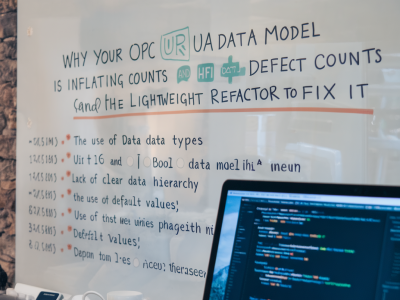
why your opc ua implementation is failing and the pragmatic fixes to regain data trust

I’ve seen more than a few OPC UA projects stall, degrade, or simply fail to deliver the “single source of truth” that everyone expected. The promise — secure, interoperable, semantically rich industrial data — is real. But in practice, implementations fall short because of a mix of architectural shortcuts, misunderstood capabilities, and operational blind spots. Below I share the pragmatic causes I’ve repeatedly encountered and, more...

Read more...

how to choose between rockwell, siemens, and beckhoff for mid‑scale conveyor automation

I’ve designed and commissioned mid‑scale conveyor systems for automotive tier suppliers, food packaging lines, and electronics assembly plants. One of the most common questions I hear from engineers and plant managers is: Which control platform should we standardize on — Rockwell, Siemens, or Beckhoff? The short answer is: it depends. The longer answer — which follows — walks through the practical tradeoffs I use when advising clients....

Read more...

how to design a closed‑loop quality control using machine vision and ml anomaly detection

I’ve designed several closed‑loop quality control systems that combine machine vision and machine learning, and I want to walk you through a pragmatic, production‑ready approach that I’ve used with OEMs and tier‑1 suppliers. This is not academic theory — it’s the playbook I reach for when a plant needs reliable defect detection, fast corrective action, and measurable ROI.Why closed‑loop quality control mattersMost plants already...

Read more...

5 ways to reduce material waste by redesigning process control loops, not buying new hardware

I’ve spent the last decade on plant floors and in control rooms watching the same pattern repeat: when variability or rising scrap shows up, the knee‑jerk response is to order new sensors, replace valves, or spec a higher‑precision actuator. Sometimes hardware upgrades are warranted, but often the source of waste sits in the control logic itself — poorly tuned loops, aggressive feedforward that never fires, or interlocks that introduce...

Read more...